


Tracking financial metrics in the modern creator economy often means sifting through speculative guesswork and conflicting figures. When you analyze high-growth children’s media franchises, opaque ad rates and diverse monetization channels obscure the real business performance. Pinpointing the exact Danny Go net worth requires unpacking multi-layered revenue streams spanning video syndication, touring logistics, and intellectual property licensing.
The business engine behind Danny Go—spearheaded by creator Daniel Coleman alongside childhood friends Michael Yager and Mindy Coleman—operates on a high-velocity production model. Generating over 120 million monthly views on YouTube alone, the brand captures premium preschool and family demographics. While traditional creators rely solely on standard AdSense payouts, this franchise diversifies cash flow across live ticketed arena shows, digital streaming distribution, and retail licensing agreements. This comprehensive analysis details the exact balance sheet, income mechanics, expense structures, and commercial growth trajectory of the enterprise.
What Is the Current Danny Go Net Worth?
The estimated danny go net worth reaches approximately $8.5 million in 2026. This valuation reflects liquid earnings, intellectual property assets, production hardware, and enterprise cash flow built since the brand launched in 2019.
Children’s entertainment commands unique financial dynamics on digital platforms. Unlike standard vloggers or gaming channels, premium educational dance content functions as recurring digital utility for millions of households and classrooms. Toddlers and school educators replay the same high-energy tracks daily, creating exceptional audience retention metrics.
Understanding this valuation requires benchmarking against broader digital entertainment standards. You can examine wider industry earnings benchmarks through detailed influencers net worth comparative data. Wealth accumulation for family entertainment brands compounds rapidly because catalog content maintains consistent viewership years after initial release.
| Metric | Estimated Figure (2026) | Primary Source / Notes |
|---|---|---|
| Estimated Net Worth | $8.5 Million | Asset valuation, catalog IP, retained enterprise earnings |
| Annual Gross Revenue | $2.8M – $4.2M | Combined YouTube, touring, streaming, and retail |
| Monthly YouTube Revenue | $140,000 – $220,000 | Programmatic contextual video ad inventory |
| Lifetime YouTube Views | 3.5+ Billion | Cumulative global channel performance |
| Subscribers | 4.2+ Million | Core digital video footprint |
| Primary Production Entity | Daniel Coleman Creative LLC | Charlotte, North Carolina production base |
How Does Danny Go Make Money on YouTube?
The financial backbone driving the danny go net worth stems directly from programmatic video monetization across Google’s partner ecosystem. With billions of cumulative views, video catalog plays produce continuous monthly cash flow.
Children’s content operates under specific regulatory structures that dictate advertising revenue. Following the FTC’s strict COPPA compliance rules, targeted advertising is disabled on “Made for Kids” video uploads. This structural mandate shifts monetization from personalized tracking ads to high-volume contextual placements.
Contextual advertisers in the toy, family travel, consumer packaged goods, and educational software sectors bid aggressively on family-safe inventory. Danny Go achieves effective RPMs (revenue per thousand impressions) ranging between $1.20 and $2.10. While lower than adult finance or software niches, the sheer scale of billions of replayed views creates substantial top-line income.
Catalog Longevity and Replay Dynamics
Active parent and classroom engagement fuels exponential watch time. Videos like “The Floor is Lava Song,” “Gorilla Smash,” and “Digging in the Dirt” function as physical movement breaks in elementary schools across North America.
A single evergreen video uploaded four years ago continues generating tens of thousands of dollars each month without additional capital expenditure. This compounding catalog value forms the primary equity underlying the channel’s commercial valuation.
Live Touring and Stage Performance Earnings
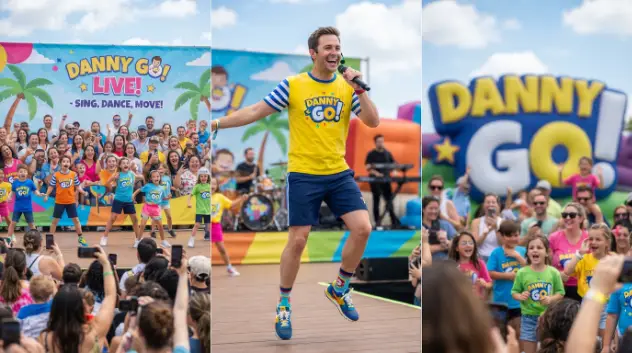
Live performance operations represent the fastest-expanding revenue segment directly increasing the danny go net worth. In 2024, the production scaled from digital screens to nationwide municipal theaters and auditorium tours.
Ticket sales provide high-margin cash realization that bypasses digital algorithm fluctuations. Touring operations across mid-sized venues generate significant gross box office receipts per market.
Live Touring Revenue Breakdown per Stop (Estimated)
┌────────────────────────────────────────────────────────┐
│ Total Gross Box Office (2,000 Seats @ $42 Avg): $84,000│
├────────────────────────────────────────────────────────┤
│ Venue Lease & Local Union Staffing:           -$22,000 │
│ Staging, Lighting & Production Transport:     -$14,000 │
│ Artist Guarantees & Crew Payroll:             -$18,000 │
│ Marketing & Ticketing Platform Fees:          -$10,000 │
├────────────────────────────────────────────────────────┤
│ Net Operating Profit per Performance:          $20,000 │
│ On-Site VIP Experience Add-Ons (Gross):        +$9,500 │
│ On-Site Merchandise Sales (Gross):            +$14,000 │
└────────────────────────────────────────────────────────┘
A thirty-city regional run generates over $2.5 million in gross ticket receipts. After factoring venue rentals, road crew payroll, staging logistics, and liability insurance, net margins hover reliably between 25% and 35%.
VIP meet-and-greet packages provide pure margin expansion. Parents routinely pay premium rates for direct photo opportunities and priority seating, adding high-yield cash flow to every scheduled tour date.
Music Streaming Royalties: Spotify, Apple Music, and Amazon
Digital streaming platforms generate passive recurring distribution royalties that steadily build the danny go net worth. High-energy music tailored for children’s activities translates seamlessly into audio-only formats for car rides, home playtime, and classroom choreography.
With millions of monthly listeners on Spotify and substantial catalog presence on Apple Music, audio streaming serves as a durable profit pillar. Streaming platforms pay rights holders on a per-stream basis, typically averaging $0.003 to $0.004 per play on Spotify and slightly higher on Apple Music.
Monthly Music Streaming Cash Flow (Estimated)
- Spotify Monthly Streams: ~18,000,000 plays ($54,000 - $72,000 gross)
- Apple Music & Amazon Music: ~8,000,000 plays ($36,000 - $48,000 gross)
- Physical & Digital Album Sales: ($3,000 - $6,000 gross)
- Estimated Net Monthly Royalty: $75,000 - $105,000
Because Daniel Coleman and his co-creators compose and retain primary publishing rights to their original musical compositions, they avoid traditional record label revenue splits. Retaining 100% master and publishing rights preserves maximum royalty margins for the production company.
Merchandise and Physical Retail Licensing
Merchandising operations contribute substantial retail margin to the overarching danny go net worth calculation. Branded apparel, live-event glowing accessories, and specialized character merchandise convert digital attention into physical product sales.
Direct-to-consumer e-commerce eliminates wholesale intermediaries, capturing healthy gross margins on branded apparel. T-shirts, hoodies, branded sweatbands, and plush character toys yield 40% to 60% gross profit margins across web store fulfillment channels.
Physical retail partnerships represent the next frontier of growth for the franchise. Entering regional and national retail chains with packaged toys, dance mats, and educational playsets unlocks recurring wholesale licensing royalties that scale without operational overhead.
What Are the Main Production and Operating Expenses?
Maintaining high-energy live-action video quality requires significant capital reinvestment. While gross revenue figures appear massive, calculating true enterprise net worth demands subtracting recurring production overhead and corporate taxes.
The Danny Go brand employs specialized sets, digital visual effects compositing, choreography personnel, and professional sound mixing. High production values distinguish their content from low-effort animations, creating a competitive moat that requires ongoing expenditure.
Major Operational Cost Centers
- Studio Facility and Set Construction: Maintaining dedicated soundstages in North Carolina with green screen cycloramas, physical prop building, and cinema-grade lighting systems.
- VFX Compositing and Post-Production: Outsourcing and employing dedicated motion graphic artists to build immersive, animated interactive video backgrounds.
- Touring Logistics and Freight: Transporting physical set pieces, audio rigs, and specialized lighting across multi-state tour routes.
- Legal, Management, and IP Protection: Retaining intellectual property attorneys for trademark registrations, contract negotiation, and copyright enforcement.
- Corporate Taxation: Operating within standard federal and state corporate tax tiers, impacting net retained earnings.
Annual Expense Allocation Model
┌────────────────────────────────────────────────────────┐
│ Post-Production, VFX & Sound Design:              22%  │
│ Live Tour Operations & Transportation:            26%  │
│ Payroll (Full-time cast, crew & admin):           24%  │
│ Marketing, Ad Buys & Tour Promotion:              10%  │
│ Legal, Accounting & Trademark Protection:          6%  │
│ Studio Soundstage Lease & Equipment Capital:      12%  │
└────────────────────────────────────────────────────────┘
Creator Economy Comparison: How Danny Go Ranks Against Competitors
Analyzing the danny go net worth requires comparative context across the specialized preschool digital media sector. The children’s digital video market contains diverse content archetypes ranging from solo performers to mega-corporations.
Comparing these balance sheets illustrates how independent live-action creators scale against venture-backed animation powerhouses and peer entertainers across the comprehensive creator economy. For additional economic benchmarks on digital media earnings, review demographic wealth distributions published by the United States Census Bureau.
| Creator / Brand | Est. Net Worth | Core Content Model | Primary Revenue Engine | Ownership Structure |
|---|---|---|---|---|
| Danny Go! | $8.5 Million | Live-Action Music & Movement | Contextual Ads + Touring | Independent (Founders) |
| Blippi (Stevin John) | $40+ Million | Live-Action Discovery | IP Acquisition + Global Retail | Moonbug Entertainment / Candle Media |
| Ms. Rachel (Songs for Littles) | $12 – $16 Million | Early Speech & Music | Digital Streaming + Licensing | Independent Production |
| Gracie’s Corner | $5 – $8 Million | Animated Nursery Rhymes | Streaming Ads + Music Royalties | Independent Family Owned |
| Cocomelon | $100+ Million | 3D Digital Animation | Massive Streaming Syndication | Moonbug Entertainment / Candle Media |
Unlike brands that surrendered equity to media conglomerates early, Danny Go maintains founder-led equity control. This structure ensures a larger percentage of gross earnings directly accrues to the creators’ net worth.
Financial Risk and Revenue Sensitivity Matrix
Evaluating long-term asset value requires analyzing the structural vulnerabilities and operational risks inherent in the digital entertainment model. The following analytical matrix illustrates risk severity, probability, and corresponding mitigating financial strategies for the Danny Go brand.
| Risk Category | Severity Level | Probability | Revenue Impact Vectors | Enterprise Mitigation Strategy |
|---|---|---|---|---|
| Platform Algorithm Shift | High | Medium | YouTube homepage recommendations, browse visibility | Diversifying into live touring and off-platform retail licensing |
| COPPA / Policy Revisions | High | Low | Programmatic contextual advertising rates | Expanding direct-to-consumer music streaming and ticketed events |
| Talent Physical Demands | Medium | Medium | Inability to perform high-exertion live shows | Developing secondary character IP and animated auxiliary series |
| Touring Inflation Costs | Moderate | High | Fuel, freight, venue rent, and crew wage increases | Dynamic ticket pricing and VIP add-on package optimization |
| Music Streaming Rate Cuts | Low | Medium | Reduced per-stream payouts on audio platforms | Retaining 100% master publishing and direct merchandise bundling |
The Team Behind the Brand: Equity and Ownership Dynamics
The commercial value represented by the danny go net worth is not held by a single individual. The franchise operates as a closely held partnership founded by childhood collaborators who handle distinct operational domains.
Daniel Coleman serves as the central on-screen personality, lead vocalist, and primary creative director. Michael Yager directs technical video production, sound engineering, and visual effects implementation. Mindy Coleman directs choreography, wardrobe design, and live performance coordination.
This shared equity architecture strengthens operational stability. Because technical execution, choreography, and business management are divided among co-founders, the brand avoids the creative burnout common among solo creators.
Future Projections: Danny Go Net Worth Through 2030
Financial forecasting indicates the danny go net worth will maintain double-digit annualized growth over the next five years. As the channel crosses four million subscribers and expands its theatrical tour footprint, new monetization avenues will mature.
The primary growth vector involves international localization and language dubbing. Translating the catalog into Spanish, Portuguese, and Mandarin introduces pre-existing, fully depreciated video assets to emerging international markets with zero structural production costs.
Five-Year Net Worth Trajectory Projection
- 2026: $8.5 Million (Baseline validation across YouTube & Touring)
- 2027: $11.2 Million (National retail distribution expansion)
- 2028: $14.5 Million (Global localization and SVOD licensing deals)
- 2029: $18.0 Million (Expanded theatrical tours and spin-off IP)
- 2030: $22.5 Million (Potential private equity or studio catalog acquisition)
Subscription video-on-demand (SVOD) licensing deals with platforms like Netflix, Hulu, or Amazon Prime Video offer immediate multi-million dollar non-exclusive streaming payouts. If the founders pursue a strategic catalog sale or private equity partnership, enterprise valuation multiples could surge substantially.
Frequently Asked Questions
What is the estimated Danny Go net worth in 2026?
The estimated net worth sits at approximately $8.5 million, calculated from digital advertising earnings, touring revenue, music royalties, and proprietary video IP assets.
Who owns the Danny Go intellectual property?
The brand and intellectual property are owned and operated by Daniel Coleman Creative LLC, founded by Daniel Coleman, Michael Yager, and Mindy Coleman.
How much does Danny Go make per YouTube video?
A high-performing video generating 20 million views produces between $24,000 and $42,000 in contextual advertising revenue over its initial multi-year lifecycle.
Does Danny Go generate money from Spotify and Apple Music?
Yes, the franchise earns an estimated $75,000 to $105,000 monthly from audio streaming platforms, retaining maximum royalty margins by owning their master recordings.
How much do Danny Go live tour tickets generate?
A standard 30-city theatrical tour generates over $2.5 million in gross ticket and merchandise sales, yielding net operating margins between 25% and 35%.
What did Daniel Coleman do before launching Danny Go?
Before establishing the media franchise, Daniel Coleman worked in digital production, songwriting, and creative media development in North Carolina.
Strategic Financial Takeaways for Digital Media Operators
Analyzing the financial architecture behind the Danny Go enterprise reveals essential operational principles for building durable wealth in the modern media landscape. Scaling enterprise value requires moving beyond single-platform advertising dependency by systematically diversifying into high-margin physical experiences and intellectual property ownership. If you operate in the digital economy, prioritize catalog longevity over short-term viral trends, protect your master publishing rights, and build direct physical monetization channels like live events and direct retail. Consult a certified financial planner or qualified corporate attorney to structure production entities and protect intellectual property assets appropriately.